
Retaining Walls
Retaining walls do more than hold back soil. They solve drainage problems, prevent erosion, create usable space on sloped properties, and add structure to your landscape design. We build retaining walls using interlocking blocks, natural stone, and poured concrete, each engineered for stability and built to perform reliably for decades. Whether you need a small garden wall or a large structural installation, we have the expertise to design and construct retaining walls that protect your property and enhance its appearance.
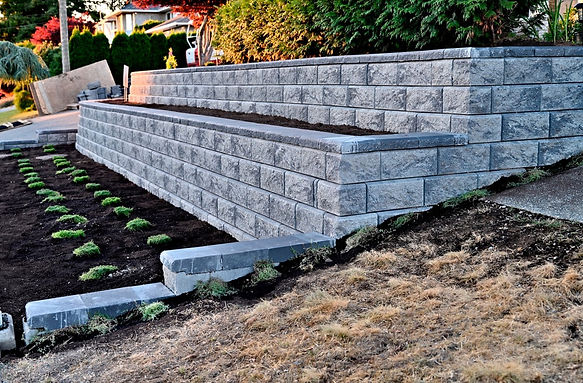
Installing A Retaining Wall
When You Need a Retaining Wall
Retaining walls are essential for properties with slopes, elevation changes, or drainage challenges. They prevent soil erosion on hillsides, create level planting beds and lawn areas, and stop water from flowing toward your foundation. If your yard has sections that wash out during heavy rain, areas where grass won't grow due to steep grades, or if you want to maximize usable space on a sloped lot, a retaining wall provides the solution. Even modest walls can make a dramatic difference in both function and aesthetics.
Material Options
We build retaining walls using several proven materials. Interlocking concrete blocks are versatile, durable, and available in various colors and textures. They're engineered specifically for retaining wall applications and can handle significant loads when properly installed. Natural stone creates a timeless, organic look that blends beautifully with garden settings and traditional homes. Poured concrete offers maximum strength for taller walls and challenging soil conditions. We'll recommend the best material based on your wall height, soil type, aesthetic preferences, and budget.
Engineering and Structural Integrity
A retaining wall is a structural element that must be designed correctly to function safely. Wall height, soil pressure, drainage, and footing depth all factor into proper construction. We calculate these elements for every project to ensure your wall can handle the forces acting on it. Taller walls may require geogrid reinforcement, which anchors the wall into the retained soil for added stability. We follow engineering principles and building codes to deliver walls that are both safe and long lasting.
Drainage is Critical
Water buildup behind a retaining wall creates hydrostatic pressure that can cause failure over time. Every wall we build includes proper drainage solutions. This typically involves a gravel backfill zone behind the wall, perforated drain pipe at the base to collect and redirect water, and weep holes or drainage gaps to relieve pressure. Managing water correctly is just as important as the wall structure itself, and we never skip this crucial step.
Installation Process
Retaining wall construction starts with excavation and creation of a level, compacted base. For taller walls, we pour a concrete footing to provide additional stability. Blocks or stones are set precisely, with each course checked for level and proper setback. As the wall rises, we install drainage materials and backfill with appropriate gravel. The cap course adds a finished look and protects the wall structure. Every detail matters when building something that needs to hold back tons of soil and water.
Terraced Designs
For properties with significant slopes, multiple shorter walls arranged in tiers often work better than one tall wall. Terracing creates distinct planting zones, reduces soil pressure on any single wall, and adds visual interest to your landscape. We design terraced systems that follow the natural contours of your property while maximizing usable space.
Ready to solve drainage issues or create more usable space on your property? Contact us today to discuss your retaining wall project and receive an expert assessment and detailed quote.